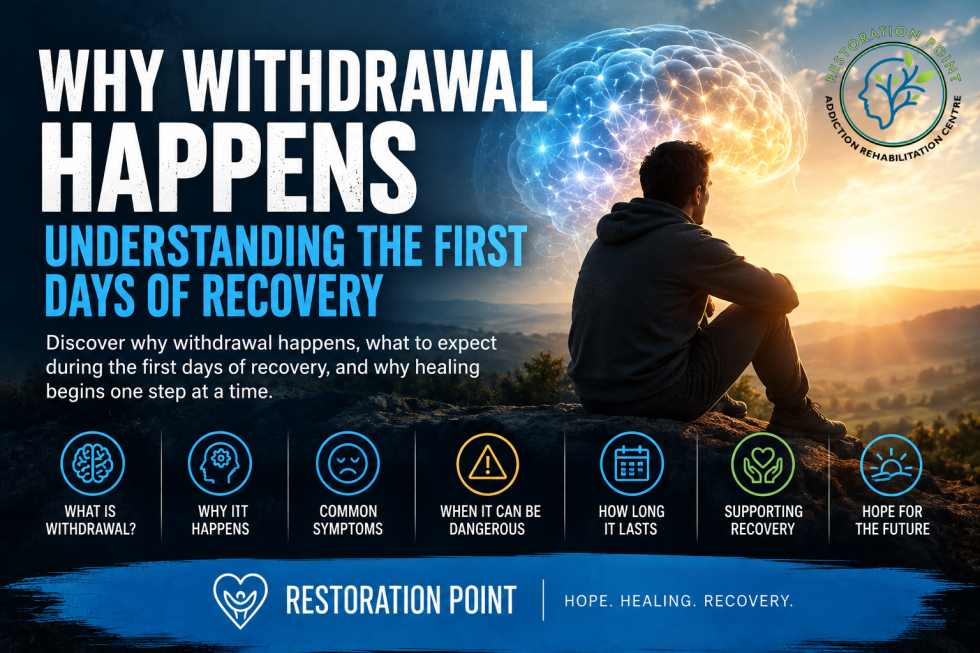
Withdrawal can be frightening, but people do not have to face it alone. Symptoms and timing vary widely by substance and individual health. Medical guidance can make withdrawal safer and help connect the first days of recovery with longer-term care.
What is withdrawal?
Withdrawal refers to physical or emotional symptoms that may occur when someone who has become dependent on a substance stops or significantly reduces use. With repeated exposure, the brain and body adapt to the substance. When the amount changes, those systems need time to adjust. Physical dependence can also happen with some medications taken as prescribed and is not by itself the same as addiction. Symptoms differ based on the substance, amount and duration of use, other medications, and a person’s health. No checklist or online article can determine whether it is safe for someone to stop at home. A clinician can ask about these factors and help plan appropriate care.
Withdrawal is not a moral failing. It is a health response that deserves care. Asking for medical guidance is a practical step toward safety, not a sign of weakness.
Why does withdrawal happen?
Repeated substance use can alter how the brain and body regulate sleep, mood, stress, movement, and other functions. When use changes, those systems may temporarily be out of balance. Some substances also lead to strong cravings or changes in mood and energy. These experiences can make stopping difficult, even when someone wants to change. Withdrawal is different for each substance. Symptoms after reducing alcohol or sedative medication can become severe and, in some cases, life-threatening. A person who uses opioids, stimulants, or other drugs may experience different symptoms and may still need medical attention or support. A clinician should help determine the safest plan.
What might someone experience?
Depending on the substance, symptoms can include anxiety, restlessness, sweating, nausea, tremors, changes in sleep, low mood, irritability, or cravings. Some people may have more serious symptoms. This list is not complete, and symptoms alone cannot predict whether withdrawal is safe to manage without supervision.
- Changes in sleep, energy, appetite, or concentration.
- Anxiety, restlessness, irritability, or low mood.
- Sweating, shakiness, nausea, or other physical discomfort.
- Strong urges to use or difficulty managing daily routines.
- In severe cases, seizures, severe confusion, hallucinations, or loss of consciousness.
Get medical advice before stopping alcohol, benzodiazepines, or prescribed medication suddenly. Withdrawal from some substances can be life-threatening and may require supervised treatment. Contact local emergency services for seizures, difficulty breathing, severe confusion, hallucinations, chest pain, loss of consciousness, or other severe symptoms.
How long does withdrawal last?
There is no one-size-fits-all timeline. Onset and duration depend on the substance, pattern of use, other health conditions, and individual factors. Some symptoms may begin soon after use is reduced; others may appear later or last longer. Emotional and sleep changes can continue after the most acute symptoms have passed. A clinician can explain what may happen in an individual case, what signs need urgent care, and whether monitoring or medication is recommended. Do not compare one person’s experience with another’s or use someone else’s timeline to decide that care is unnecessary.
How to make the first days safer
If you or someone you care about is thinking about stopping, contact a health professional or treatment service first. Share what substances and medications are involved, how they have been used, and any health conditions or past withdrawal symptoms. Be honest about the details; the information helps the professional plan safe care.
Ask for clinical guidance
Discuss whether withdrawal can be managed at home or needs supervised care. The safest setting depends on the individual and the substance, not on willpower.
Know how to get urgent help
Ask what symptoms require emergency attention and keep the local emergency contact available. If severe symptoms occur, seek help immediately rather than waiting to see whether they pass.
Arrange practical support
If the person wants help, arrange transport to appointments, meals, check-ins, or someone to accompany them. A clinician can advise what kind of observation and support is appropriate.
Follow the care plan
Use medication only as directed and keep follow-up appointments. Tell the care team if symptoms worsen, new symptoms appear, or the plan feels difficult to follow.
Connect withdrawal care with recovery care
Stabilization is an important first step, but it may not address all the reasons someone uses. Ask about ongoing counseling, medication when indicated, peer support, and help with other health or life needs.
What not to do
In a difficult moment, avoid responses that add risk or make it harder to seek support.
Do not stop suddenly without advice
Stopping alcohol, benzodiazepines, or prescribed medication abruptly can be dangerous.
Do not take someone else’s medication
Use medicines only as directed by a qualified health professional.
Do not wait out severe symptoms
Seizures, severe confusion, hallucinations, chest pain, or loss of consciousness need urgent care.
Do not self-treat with another substance
Ask a clinician about safe symptom management and the right level of care.
Do not leave someone at risk alone
Seek help and follow professional instructions if severe withdrawal may be occurring.
Choose the next safe step. A difficult moment is a reason to reconnect with qualified support, not to face the problem alone.
Support makes recovery more manageable
Medical professionals can assess risk, treat complications, and discuss appropriate withdrawal care. After stabilization, counseling, medication when indicated, peer support, and other recovery services can help with ongoing needs and reduce the chance that the person is left to manage alone. Supportive family or friends can help with appointments and daily needs when invited, while respecting privacy and boundaries.
Support after the first days
Withdrawal care can open the way to recovery support that continues beyond the most acute symptoms. A clinician can help plan follow-up based on the person’s health and goals.
Keep follow-up care
Attend agreed appointments and tell the care team if new concerns arise.
Discuss ongoing treatment
Ask about counseling, medication when indicated, and peer support options.
Support daily needs
Make practical arrangements for meals, rest, transport, and a safe place to recover.
Plan for cravings or stress
Ask a professional what to do if difficult symptoms or urges return.
Include trusted people
Invite family or friends to help with agreed tasks while respecting privacy and boundaries.
Keep emergency help close
Know the local emergency contact and seek urgent care for severe symptoms.
Take the next step with support
Getting through withdrawal is not the whole of recovery, but it can be an important beginning. A safe plan, compassionate care, and follow-up support can make the next stage more manageable. If you are concerned about yourself or someone close to you, contact a health professional or treatment service. In an immediate emergency, call local emergency services.
What supervised support can include
Depending on the person’s assessment, a care team may recommend monitoring, medicines to manage particular symptoms, treatment for related health concerns, or support in a setting with closer observation. The plan should be based on the person’s health and the substance involved. Someone with a history of severe withdrawal, other medical conditions, or multiple substances should share that information with the clinician because it can affect safety. Supportive friends and family can help by listening, respecting privacy, and assisting with agreed practical needs. Ask what the person wants shared and with whom. If they become confused, have a seizure, lose consciousness, or develop another severe symptom, seek emergency care rather than trying to manage it alone.
A next step with support
Speak with a clinician about a safe plan rather than trying to manage potentially dangerous withdrawal alone. Contact local emergency services for immediate danger.
Learn more: NIAAA: Alcohol withdrawal and care · MedlinePlus: Diazepam safety information · SAMHSA: Treatment options
Speak to our team