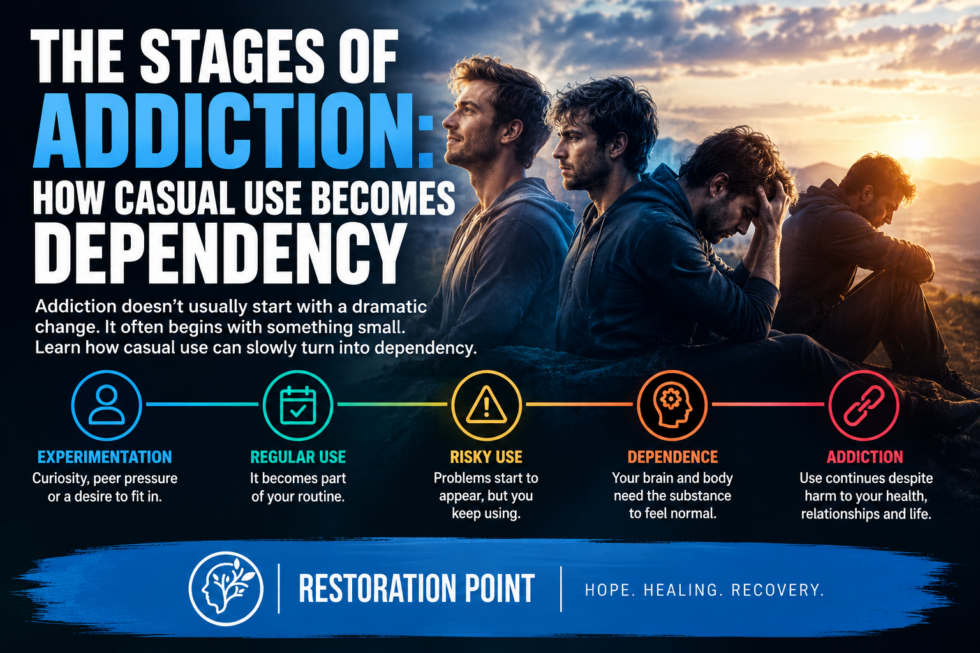
People often ask how casual use becomes dependency. There is no universal sequence, and not everyone moves through the same stages. Risk depends on the substance, pattern of use, health, circumstances, and many other factors. Noticing changes early can help someone seek support before a crisis.
What do people mean by “stages”?
Stages are a simple way to describe how a pattern of use might change; they are not a timetable or a diagnosis. Some people use occasionally without developing a substance use disorder. Others experience growing consequences or difficulty stopping. A person may move back and forth, make changes, or seek help at any point. A health professional assesses the full pattern rather than assigning a label from one event. Substance use disorder is diagnosed using a group of symptoms and the impact on daily life over time. No single behavior, level of tolerance, or withdrawal symptom is enough by itself to tell someone that they have a disorder. If use is causing concern, a confidential conversation with a qualified clinician can be a reasonable first step.
Remember: Harm can occur at any level of use. A person does not have to reach a particular “stage” or hit rock bottom before asking for help.
How a pattern of use may change
These broad patterns can help explain what people sometimes notice. They are not inevitable steps, and the same substance can affect two people differently.
Trying or occasional use
Use may happen infrequently or in social settings. Even occasional use can carry risks, including impairment, unsafe decisions, interactions with medication, or overdose, depending on the substance and situation.
Use becomes more central
A person may use more often, spend more time obtaining or recovering from a substance, or begin relying on it to manage stress, sleep, pain, or difficult feelings. Plans and routines may increasingly revolve around use.
Control becomes harder
They may take more or use longer than intended, want to cut down but find it difficult, experience strong urges, or continue even when use is harming health, relationships, work, or responsibilities.
Significant harm or dependence
Some people develop tolerance or withdrawal, lose important activities, or keep using despite serious consequences. Physical dependence can occur with prescribed medication and is not, by itself, the same as addiction. A clinician can explain the difference in an individual case.
Factors that can raise risk
There is no single cause. Biology, age, mental and physical health, trauma, family history, stress, access to care, peer environment, and the substance itself can all shape risk. A difficult period or one risk factor does not mean a person will develop an addiction; it may be a reason to check in and seek support sooner.
- Using a substance to cope with anxiety, pain, low mood, trauma, or sleep problems.
- Frequent or heavy use, or using substances in combination.
- Easy access and social settings where use is common or encouraged.
- Changes in health, relationships, work, or daily structure that increase stress.
- Limited support or difficulty reaching appropriate health services.
Signs worth discussing with a professional
Watch for a pattern rather than one isolated sign. The following changes are reasons to have a conversation, not a do-it-yourself diagnostic checklist:
- Using more than intended or spending more time on use and recovery.
- Repeatedly trying to cut down without being able to maintain the change.
- Strong urges, growing tolerance, or withdrawal symptoms.
- Missing responsibilities or giving up activities because of use.
- Continuing despite physical, emotional, financial, or relationship harm.
- Taking risks while intoxicated or using in unsafe situations.
Seek urgent care for immediate danger. Seizures, difficulty breathing, loss of consciousness, severe confusion, or suspected overdose require emergency help. If alcohol or sedative medication is involved, seek medical advice before stopping suddenly; withdrawal can be dangerous.
What to do if you recognize a change
You do not need to wait for a crisis or decide what label fits. Start with a health professional, addiction specialist, or treatment service and describe what has changed. A useful assessment can consider physical health, emotional wellbeing, the person’s goals, safety, and practical barriers to care.
Talk without judgment
If you are concerned about someone else, choose a calm moment and share specific observations. Ask how they see the situation and whether they would consider speaking with a professional.
Be honest about the pattern
Note what is being used, how often, the effects, attempts to cut down, and any withdrawal or safety concerns. Honest information helps a clinician assess risk; it is not a reason to shame someone.
Ask about options
Treatment may involve primary care, counseling, medication for some disorders, peer support, or a more intensive program. The right setting depends on clinical needs and personal circumstances.
Plan for safety
Ask what signs need urgent attention and how to reduce immediate risks while care is arranged. Do not stop alcohol, benzodiazepines, or prescribed medication abruptly without medical guidance.
Review and adjust
Support can change as needs change. Follow-up appointments help review what is working, address barriers, and consider another approach if the first option is not a good fit.
Myths that can delay help
It is not true that everyone follows the same path, that a person must “hit rock bottom,” or that struggling to stop means they lack willpower. It is also possible to experience serious harm without looking a certain way or meeting a stereotype. Earlier help can focus on a person’s actual needs and reduce avoidable risk.
What not to do
In a difficult moment, avoid responses that add risk or make it harder to seek support.
Do not assume the stages are inevitable
People do not follow one universal path, and a change in use does not predict what will happen next.
Do not wait for rock bottom
A person can seek advice before serious consequences or a crisis occur.
Do not diagnose from a checklist
Signs are reasons to talk with a clinician, not a substitute for a professional assessment.
Do not shame or label
Respectful, specific conversations are more useful than blame or stereotypes.
Do not stop suddenly without advice
Withdrawal from alcohol, sedatives, or some medications may need medical support.
Choose the next safe step. A difficult moment is a reason to reconnect with qualified support, not to face the problem alone.
Ways to support healthier choices
Prevention and early support can focus on a person’s health and circumstances, rather than trying to predict a fixed path. A professional can help identify relevant risks and discuss reasonable next steps.
Talk early
Share concerns when you notice a pattern changing, before serious harm or a crisis occurs.
Discuss safety
Ask a clinician about substance interactions, impairment, and other risks specific to the situation.
Address the reasons for use
Ask whether pain, stress, sleep, or mental health needs could use additional professional care.
Make an assessment accessible
Offer help finding a provider or arranging transport if the person wants assistance.
Review changes over time
Follow up with a health professional if use or its effects change.
Ask about support options
Treatment can be considered at different points and adjusted as needs become clearer.
Support can begin at any point
Whether use is occasional, increasing, or already causing harm, respectful support and professional assessment can open a way forward. Change may take more than one attempt, and asking questions does not commit a person to a particular treatment. A practical next step is enough to begin.
Reducing risk while you seek answers
If you are unsure whether a pattern is becoming harmful, take concerns seriously without assuming a diagnosis. A clinician can help distinguish occasional risk, physical dependence, and a substance use disorder, and can recommend an appropriate level of care. A person can also ask for help with a specific goal such as cutting down, managing cravings, or avoiding dangerous combinations. Any change should account for withdrawal and other medical risks. For friends or family, a useful approach is to stay curious and specific. Ask what the person has noticed, mention concrete effects you have observed, and offer to help arrange an assessment. Do not wait for severe consequences before raising concern. An early conversation can focus on health and choices, rather than blame or a label.
A next step with support
If a pattern worries you, a professional can help clarify options without judgment. Contact Restoration Point or a trusted health service to discuss a first step.
Learn more: SAMHSA: Substance use disorder treatment · NIDA: Substance use disorder criteria · SAMHSA: About recovery
Speak to our team