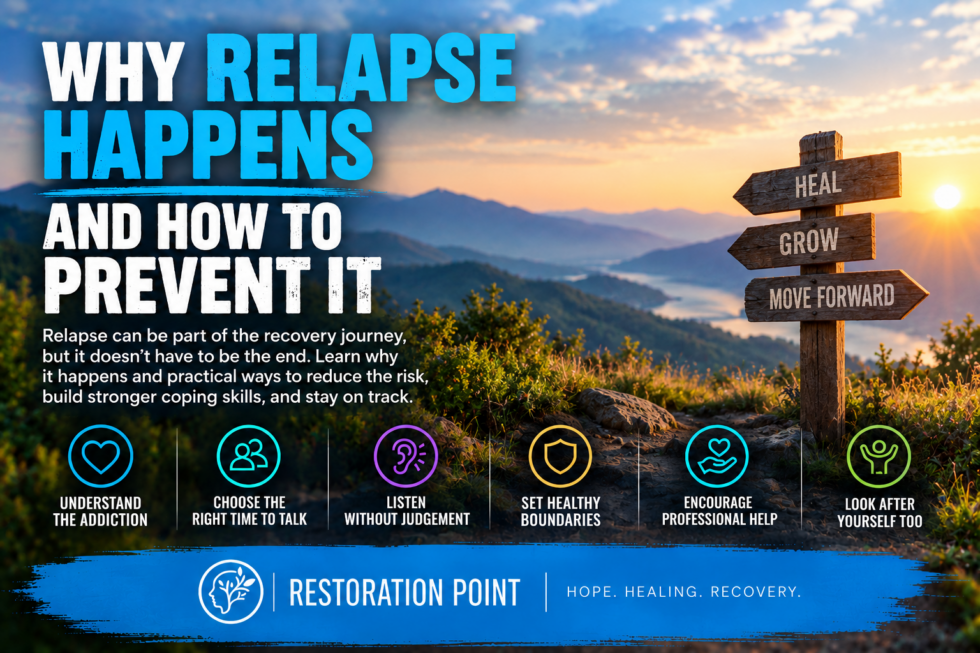
Recovery is a process, and a return to substance use can happen. It does not erase progress or prove that treatment has failed. It is a signal to reconnect with support, review what happened, and adjust the care plan with qualified professionals.
What does relapse mean?
People use the word relapse to describe a return to substance use or to symptoms after a period of change. It can happen after treatment, during ongoing recovery, or while someone is trying to make a change on their own. A return to use can range from one episode to a more sustained pattern. In either case, a prompt, supportive response can reduce harm and help the person get back in touch with care. Recovery is not a straight line. A difficult moment does not cancel the skills, relationships, or progress a person has built. Instead of asking who is to blame, it is more useful to ask what was happening, what safety needs attention now, and what support could help next.
A return to use is not a reason to give up. Contacting a treatment provider, counselor, peer support, or trusted person early can help turn a setback into a plan for renewed care.
Why can relapse happen?
There is rarely one explanation. Cravings, stress, grief, conflict, isolation, pain, untreated mental health concerns, and familiar environments can make recovery harder. A sudden change in housing, work, relationships, or routine can also disrupt support. Sometimes a person feels better and assumes they no longer need the care that was helping them.
- Emotional strain, exhaustion, or a difficult life event.
- People, places, or routines associated with previous use.
- Missed appointments or interrupted medication and support plans.
- Untreated health concerns, cravings, or sleep difficulties.
- Practical barriers such as transport, cost, work, or unstable housing.
- Overconfidence about risk or pressure to manage alone.
Notice early warning signs
Warning signs are personal, and they may be subtle. Someone may withdraw from supportive people, stop attending appointments, become more secretive, or return to routines linked with use. They may experience stronger cravings, increased stress, poor sleep, or thoughts that one episode will not matter. These changes do not guarantee a relapse; they are opportunities to check in and strengthen support. Work with a clinician or recovery support person to identify the signs that matter for your situation. A short written plan can make it easier to act when emotions are high or decision-making feels difficult.
Overdose risk can increase after reduced or stopped use. Tolerance may have fallen, so a previously familiar amount can be dangerous. If a person is unconscious, difficult to wake, or having trouble breathing, contact local emergency services immediately. Use naloxone if opioid overdose is suspected and it is available, following its instructions.
Build a relapse-prevention plan
A plan is not a promise that challenges will never occur. It is a set of practical options for responding earlier and reconnecting with help.
Map your higher-risk situations
Write down emotions, situations, relationships, and routines that tend to make use more likely. Include positive events if they can bring pressure or change your schedule.
Choose people to contact
Identify a few trusted people and agree on how and when to reach them. Keep their numbers available. Consider a counselor, peer support person, sponsor, or family member who respects your recovery goals.
Decide how to leave or get safe
Plan how to step away from a risky setting, get transport, or spend time with someone supportive. If you are concerned about violence or another immediate threat, prioritize safety and contact urgent help.
Keep treatment within reach
Make appointments, treatment contacts, and medication instructions easy to find. If a plan feels difficult to follow, tell the care team; they can help address obstacles or discuss alternatives.
Protect everyday routines
Plan realistic support for sleep, meals, movement, transport, and meaningful activities. Small routines can help provide structure, but they do not replace professional care when it is needed.
If substance use returns
Respond as soon as it is safe to do so. Contact a treatment professional or trusted support person and share what happened honestly. Ask whether medical attention is needed, especially if there has been an overdose, injury, mixing of substances, or a change in health. Revisit the plan together and identify what would make the next step easier. If a person is not ready to talk, keep the response calm and let them know help remains available. Avoid blame, public confrontation, or withdrawing all support. You can care about someone while maintaining boundaries and protecting your own safety.
What not to do
In a difficult moment, avoid responses that add risk or make it harder to seek support.
Do not call recovery a failure
A return to use does not erase progress. Focus on safety and the next supportive step.
Do not delay urgent care
Unconsciousness, trouble breathing, or a seizure requires emergency help.
Do not stop treatment alone
Speak with the care team before changing prescribed medication or a support plan.
Do not shame or isolate
A calm response can make it easier to reconnect with care and discuss what changed.
Do not ignore overdose risk
Tolerance may have fallen after reduced use. Treat overdose signs as an emergency.
Choose the next safe step. A difficult moment is a reason to reconnect with qualified support, not to face the problem alone.
Strengthen ongoing support
Counseling, peer support, family support when appropriate, and treatment for other health concerns can help someone stay connected. Some substance use disorders have effective medications; a qualified clinician can explain whether they may be appropriate. The right combination is personal and can change over time. Recovery plans also work better when they account for practical needs, not only substance use.
Ways to strengthen a recovery plan
A recovery plan can evolve as daily life and personal needs change. Revisit it with a qualified professional or trusted support person, especially after a difficult period.
Keep support visible
Store treatment contacts and agreed steps somewhere easy to reach.
Stay connected
Maintain regular contact with counseling, peer support, or other chosen care.
Make routines realistic
Plan achievable ways to support sleep, meals, transport, and meaningful activities.
Review health needs
Tell the care team about changes in mood, pain, medication, or physical health.
Plan a safer response
Agree on who to contact and where to go if risk increases.
Know overdose signs
Know when to call emergency services and how to use naloxone if it is part of the plan.
Prevention is preparation, not perfection
No plan removes every challenge. Regular check-ins, accessible treatment, supportive relationships, and a willingness to adjust can make it easier to respond early. If a setback occurs, review it with compassion and focus on the next safe step. Help remains available, and recovery can continue.
After immediate safety is addressed
Once urgent medical concerns are handled, the person and their care team can look at what led up to the return to use. This may include changes in mood, stress, medication, routine, or access to support. The goal is to understand what the person needs now and update the plan, not to require them to explain themselves perfectly before receiving care. With the person’s agreement, trusted supporters can help by offering transport, helping them contact the treatment team, or checking in at an agreed time. Ask the person what would actually be useful, and do not take on a role that feels unsafe or beyond your capacity. Supporters can also seek their own guidance.
A next step with support
If use returns, reconnect with a treatment professional and review immediate safety. For support options, contact Restoration Point or a local health service.
Learn more: SAMHSA: Treatment options · SAMHSA: About recovery · NIDA: Seeking drug abuse treatment
Speak to our team