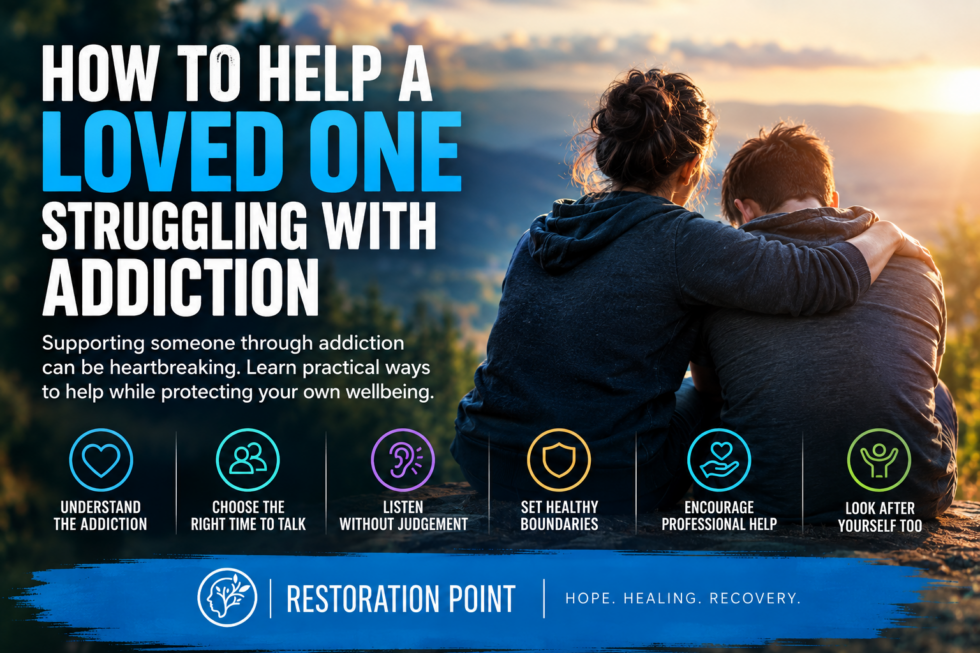
Watching someone you care about struggle with substance use can bring fear, anger, and uncertainty. You cannot make another person enter recovery, but you can offer steady, respectful support, encourage professional help, and protect your own wellbeing along the way.
Understanding what your loved one may be facing
Substance use disorder is a health condition, not a character flaw. Repeated use can affect a person’s health, judgment, relationships, and ability to stop even when they want to. People may use substances while coping with pain, stress, trauma, mental health concerns, or difficult circumstances. Understanding this does not mean ignoring harm; it can make a caring conversation more possible. There is no single sign that proves someone has an addiction. You may notice changes in mood, sleep, reliability, health, finances, or relationships. A qualified clinician can assess the whole picture and discuss care. Friends and family can share observations, but they do not need to diagnose the person before offering concern or help.
Did you know? Family and friends can offer useful support, but they also need support of their own. Speaking with a counselor or family support service can help you set boundaries and manage the strain.
Why reaching out can feel difficult
A person may worry about stigma, cost, withdrawal, privacy, or losing control of their choices. They may not see the effects of use in the same way you do, or they may be unsure what kind of help is available. Shame and arguments can make it harder to talk openly. These barriers are real, but they do not mean that change is impossible.
- Fear of being judged or labeled can keep someone from asking for help.
- Practical barriers such as transport, work, childcare, or cost may seem overwhelming.
- Other health, housing, relationship, or legal stress may compete for attention.
- Past attempts to change may have been difficult, which can reduce confidence.
- Dependence can make stopping feel frightening, especially if withdrawal may be unsafe.
Signs that a supportive conversation may help
Consider reaching out when substance use is affecting safety, health, responsibilities, or relationships, or when the person says they want things to change. Useful observations are specific and nonjudgmental: missed commitments, injuries, secrecy, withdrawal symptoms, or a change in how often or how much they use. One incident alone does not tell the whole story, and a clinician is best placed to assess it.
Act on immediate danger. If the person is unconscious, having trouble breathing, experiencing a seizure, or in another medical emergency, contact local emergency services. If you feel unsafe, move to a safer place and seek urgent help.
How to offer help
Choose a private time when the person is not intoxicated and you both have time to talk. Speak from care, describe what you have seen, ask what they think, and listen before offering solutions. The goal is to make connection and a next step easier, not to win an argument.
Start with care
Try: “I care about you, and I’m worried about what I’ve noticed. Would you be open to talking about how things have been?” Use “I” statements and avoid labels, threats, or a long list of past mistakes.
Listen and ask
Use open questions such as “What feels hardest right now?” or “What kind of support would feel useful?” Reflect what you hear. A calm conversation can continue over more than one discussion.
Offer practical options
With their agreement, look up a qualified treatment service, help make a call, arrange transport, or go along to an appointment. Care may include counseling, medication when appropriate, peer support, and help with related health or practical needs.
Encourage a professional assessment
A health professional can discuss substance use, health risks, withdrawal, and possible treatment. If alcohol, sedatives, or prescribed medication are involved, encourage medical advice before the person stops suddenly.
Keep the door open
If they are not ready, let them know you remain willing to talk. You can share contact information, check in later, and respond calmly if they reconsider. Respecting their choices does not require pretending there is no problem.
What not to do
In a difficult moment, avoid responses that add risk or make it harder to seek support.
Do not shame or threaten
Blame and threats can shut down a conversation. Share concerns calmly and focus on safety.
Do not argue while they are intoxicated
Wait for a safer, calmer moment to talk and listen.
Do not cover up every consequence
You can care without taking responsibility for choices that belong to another adult.
Do not give unsafe help
Avoid providing money or medication if you believe it could increase risk.
Do not manage withdrawal alone
Medical guidance is important because withdrawal from some substances can be dangerous.
Choose the next safe step. A difficult moment is a reason to reconnect with qualified support, not to face the problem alone.
Look after your own wellbeing
Supporting someone can affect sleep, finances, relationships, and emotional health. Speak with a counselor, trusted person, family support group, or healthcare professional. Keep routines and activities that help you stay well. If children or other family members are affected, consider what support and reassurance they need too. You deserve care whether or not your loved one is ready for treatment.
Support that helps over time
Support can remain useful after an initial conversation or treatment appointment. Small, consistent actions can help your loved one feel less isolated while keeping responsibility and choice with them.
Check in with care
Offer contact that is steady and respectful, without making every conversation about substance use.
Keep help practical
When invited, assist with transport, appointments, meals, or finding a treatment service.
Respect their choices
Offer options and let the person decide what support they are ready to accept.
Hold clear boundaries
Be consistent about what you can provide and what you need for everyone to remain safe.
Build your own support
Stay connected with trusted people, counseling, or a family support group.
Know when to act urgently
Recognize medical danger and contact local emergency services when immediate help is needed.
Recovery can start with one next step
There is no single path or timetable. Treatment can be adjusted as a person’s needs change, and reconnecting with care after a difficult period is still progress. You can offer encouragement without carrying the whole responsibility for someone else’s recovery. Compassion, clear limits, and reliable professional support can help make room for change.
If the person is not ready
A loved one may decline an offer of help, even when you are genuinely worried. You can acknowledge their choice, say what concerns you, and offer to talk again. Avoid turning every interaction into a discussion about substance use; ordinary, caring contact can help preserve trust. If they later ask for support, be ready with one manageable option rather than an overwhelming list. You can also seek guidance for yourself. A counselor or family support service can help you think through safety, boundaries, and how to respond to recurring situations. If the person is a minor or someone who depends on you for care, speak with an appropriate health professional about your responsibilities and the safest next steps.
A next step with support
You can offer support without carrying this alone. For treatment information, contact Restoration Point or talk with a qualified health professional.
Learn more: SAMHSA: Helping families cope · SAMHSA: Treatment options · SAMHSA: About recovery
Speak to our team