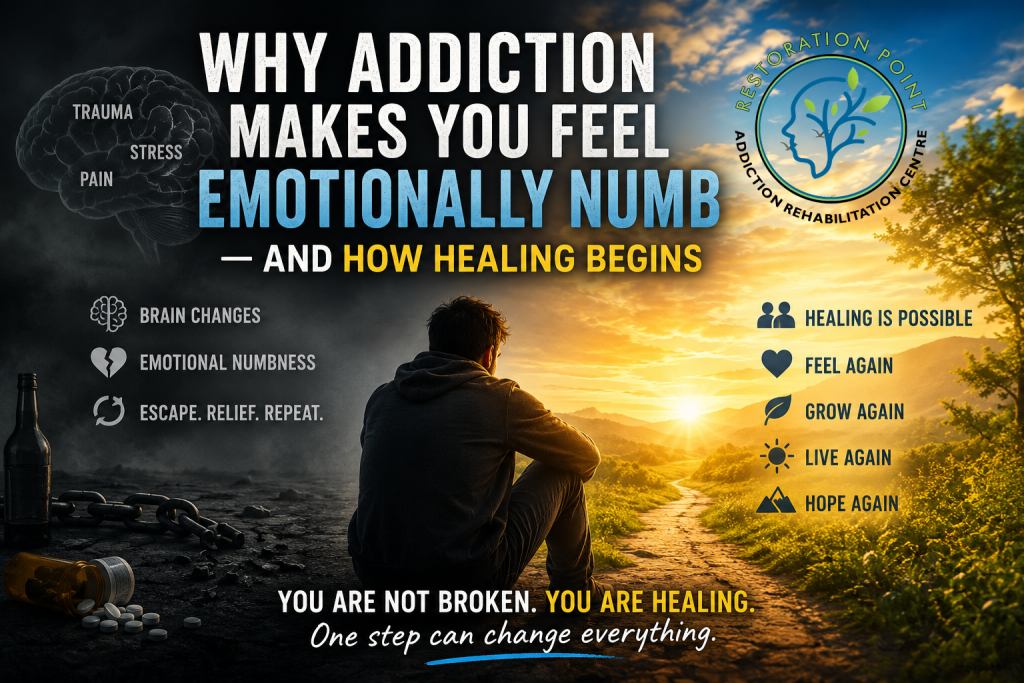
Many people who struggle with addiction describe feeling empty, disconnected or unlike themselves. Emotional numbness is a common but often misunderstood effect of addiction. It can touch emotions, relationships, motivation and the brain’s ability to experience daily life fully.
Substances may begin as a way to escape pain, stress, trauma, loneliness or anxiety. What offers temporary relief can gradually change how the brain processes pleasure and emotion.
Understanding emotional numbness
Emotional numbness means feeling disconnected from emotion or unable to fully experience it. People may feel distant from loved ones, lose excitement for life, struggle to cry or find themselves emotionally flat.
It can develop as a protective response when pain feels overwhelming. The mind attempts to reduce emotional intensity - but in doing so, it can distance a person from both pain and joy.
How addiction changes reward
Dopamine plays an important part in motivation, pleasure, reward and emotional engagement. Repeatedly flooding the brain with high dopamine levels can reduce its sensitivity to natural rewards over time. Ordinary experiences that once felt meaningful may begin to feel dull.
The cycle can deepen: emotional pain creates a desire for escape; substance use brings short-term relief; dependence grows; numbness and cravings become stronger.
Trauma and emotional pain
Many people carry wounds from neglect, abuse, rejection, loss, grief or unstable environments. Substances may feel like a way to quiet pain that is difficult to face. Yet addiction often pushes that pain further beneath the surface rather than healing it.
When feelings return
In early recovery, emotions may return before stability does. Sadness, fear, anger, loneliness and shame can feel intense. This can be difficult, but it may also be a sign that healing is beginning and that support is needed.
Supporting emotional recovery
Build safe relationships
Connection reduces isolation and creates space for honesty, trust and healing.
Seek professional support
Therapy can help uncover emotional wounds and develop practical tools for resilience.
Care for physical health
Sleep, movement, nourishment and hydration all support brain recovery and wellbeing.
Rediscover purpose
Recovery grows stronger when there is something meaningful to move toward.
Healing is possible
Addiction may numb emotions for a season, but numbness does not define the future. With time, support and compassionate treatment, emotions can return, relationships can be restored and life can become meaningful again.
Healing often begins with one honest step
The brain can heal. Emotions can return. You do not have to do it alone.
Speak to our team