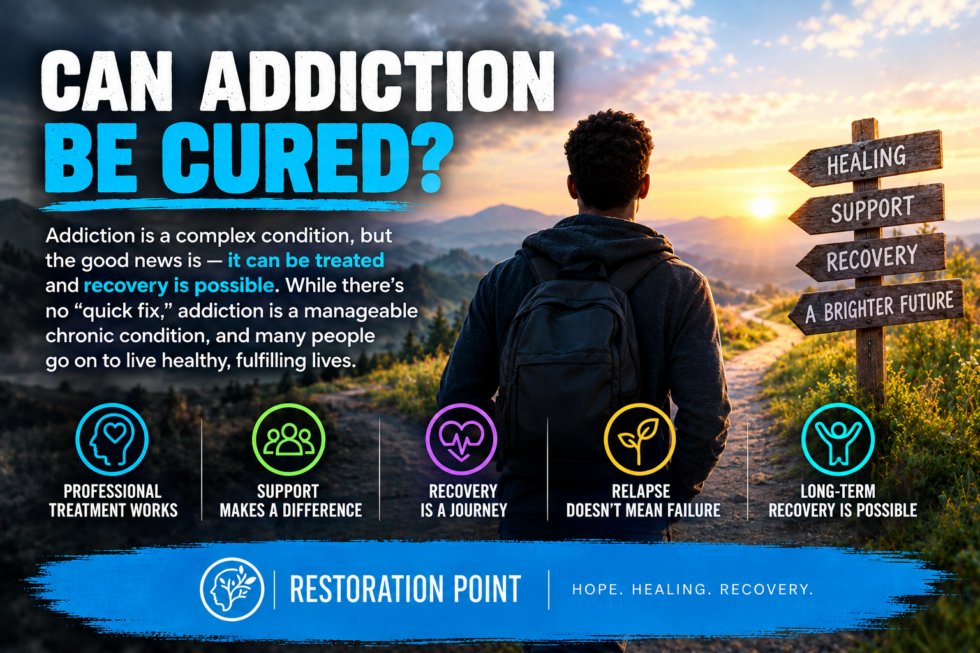
There is no single answer that fits every person or every substance. Addiction is treatable, and many people build healthy, meaningful lives in recovery. Some people need ongoing support or care again when symptoms return. Recovery can be a lasting process of change rather than a one-time fix.
What do people mean by “cure”?
People may use “cure” to mean no longer experiencing cravings, stopping harmful use, or feeling confident that life is stable. Health professionals may use terms such as treatment, remission, or recovery. The language varies, but it recognizes both that meaningful improvement is possible and that a person’s needs can change over time. A substance use disorder is not a personal failure. Repeated use can affect brain and body systems involved in reward, stress, and decision-making, while health, relationships, trauma, and life circumstances can also play a role. Understanding addiction as treatable makes room for practical care instead of blame.
Recovery can look different for different people. It may involve clinical treatment, medication, peer or family support, faith or community connections, self-care, and other approaches that fit the person’s goals and needs.
Can treatment make a difference?
Yes. Treatment can help people reduce or stop harmful use, address health concerns, develop coping skills, rebuild daily routines, and work toward goals that matter to them. It is not always quick, and a first plan may need adjustment. This does not mean care cannot work; finding the right support can take time.
Behavioral care
Counseling and structured therapies can help a person understand patterns, practice coping strategies, and work through mental health or relationship concerns alongside substance use.
Medication when appropriate
For some substance use disorders, approved medications can reduce cravings, withdrawal symptoms, or other risks. A qualified clinician can explain possible benefits, limits, and monitoring for an individual.
Peer and community support
Peer groups, recovery communities, family support, and trusted relationships can reduce isolation and help make ongoing care easier to maintain.
Practical and whole-health support
Health care may also address pain, sleep, housing, work, safety, and other needs that affect recovery. Support is more useful when it reflects a person’s whole life.
Why care may continue over time
Recovery is personal and does not follow one timeline. Some people need help at particular moments; others benefit from regular support over a longer period. Stress, illness, major life changes, or a return of symptoms may mean the plan should be reviewed. Having support available does not make recovery less real, just as managing another health condition does not erase the progress already made. A return to substance use is a reason to reconnect with care, not a verdict on the person’s future. It may help to review what was working, what changed, and what additional support could improve safety. If tolerance has fallen after a period of reduced or stopped use, overdose risk may be higher than before.
What progress can look like
Progress is not measured only by a perfect record. Depending on personal goals and clinical advice, it may include safer choices, improved health, fewer cravings, better relationships, steadier work or school attendance, or feeling more hopeful and connected. Small changes can matter, and setbacks can be part of learning what support is needed.
- Being able to talk honestly with a health professional or trusted person.
- Attending appointments and asking questions about treatment options.
- Building routines and relationships that support wellbeing.
- Learning how to respond to cravings, stress, or difficult emotions.
- Returning to care when circumstances or needs change.
How can someone take the first step?
Start with a trusted health professional or treatment service and explain what has been happening, including the substance, pattern of use, health effects, and previous attempts to change. Ask about the available options, how follow-up works, and any costs or practical requirements. You can bring a supportive person if you want one there.
Ask for an assessment
A professional can discuss immediate risks, health needs, and which level of care may be appropriate. You do not need to know in advance which program or treatment you want.
Discuss the full picture
Mention mental and physical health, medications, housing, relationships, and responsibilities. These details can affect what support is safe and practical.
Compare care options
Ask whether care includes licensed professionals, evidence-informed support, medication when appropriate, and a plan for follow-up. A treatment provider can explain what is available locally.
Plan for safe change
If alcohol, benzodiazepines, or another prescribed medication is involved, seek medical guidance before stopping suddenly. Some withdrawal can be dangerous and needs supervised care.
Stay connected
Follow-up, peer support, and practical help can make it easier to continue. If the first approach does not fit, talk with the care team about another option.
Questions worth asking a treatment provider
It is reasonable to ask who will provide care, how progress and safety are reviewed, what medications or therapies may be considered, and how the plan can respond to a setback. Ask how family may be involved if you want that, and what support is available after a more intensive program ends. Clear answers can help a person make an informed choice.
What not to do
In a difficult moment, avoid responses that add risk or make it harder to seek support.
Do not expect one universal treatment
Care should reflect the person's health, goals, circumstances, and response over time.
Do not treat support as a failure
Ongoing care can be part of meaningful recovery and wellbeing.
Do not stop prescribed care on your own
Talk with the clinician managing treatment before changing medication or appointments.
Do not make a setback a verdict
If symptoms return, reconnect with care and review the plan.
Do not stop alcohol or sedatives suddenly
Get medical advice first because withdrawal can be dangerous for some people.
Choose the next safe step. A difficult moment is a reason to reconnect with qualified support, not to face the problem alone.
Get medical help for urgent symptoms. If someone is unconscious, having a seizure, struggling to breathe, or at immediate risk of harm, contact local emergency services. For concerns about withdrawal, speak with a health professional promptly rather than attempting an unsupervised stop.
Support that can sustain recovery
Ongoing support can help a person maintain progress and respond when their health or circumstances change. The mix of care should reflect their needs and preferences.
Keep follow-up appointments
Regular check-ins make it easier to review progress, questions, and changing needs.
Ask about all suitable care
Discuss counseling, medication when appropriate, and community support with a qualified provider.
Include whole-health needs
Talk about sleep, pain, mental health, relationships, and other concerns alongside substance use.
Build supportive connections
Peer, family, and community relationships may help reduce isolation when the person wants them involved.
Set meaningful goals
Choose realistic health and life goals that matter to the person.
Review the plan
Revisit care if symptoms return, circumstances shift, or a treatment approach no longer fits.
Hope is compatible with ongoing care
There may not be a single moment when every difficulty disappears, but people can make meaningful changes and build lives they value. Recovery can include periods of confidence, difficult periods, and renewed support. Compassionate care, realistic goals, and connection can help a person keep moving toward better health and wellbeing.
How to think about long-term change
Some benefits appear quickly, while other changes take time. A person may first focus on safety and health, then work on relationships, daily responsibilities, or goals that became harder during active use. People can value recovery even if they still experience cravings or need treatment. The important question is whether the support is helping the person move toward safer health and a life that matters to them. There is no requirement to choose a single approach forever. Clinicians can help review progress, side effects, access barriers, or changes in personal goals. If care needs to change, returning to a provider or seeking a second professional opinion can help someone consider other options without treating the earlier effort as wasted.
A next step with support
Treatment and recovery support can be tailored to a person's needs. Contact Restoration Point or a qualified health professional to discuss a starting point.
Learn more: SAMHSA: Treatment options · SAMHSA: About recovery · SAMHSA: Finding quality treatment
Speak to our team